|
Bathing risksVisiting beaches throughout the year, and especially during the bathing season, is a very rewarding activity but, like visiting other natural environments, it can involve risks that are important to know and that can generally be divided into three broad categories. Geomorphological risksRelated to the physical characteristics of the seabed, these can make swimming dangerous even in calm sea conditions
Physico-chemical and biological risksFactors affecting bathing water quality
Individual risks
The risk of drowning, as described in the 2023 ISTISAN report, is a global phenomenon that requires shared intervention strategies. In 2019, the Ministry of Health, implementing the WHO guidelines, established the National Observatory for drowning prevention, involving scientific, environmental and rescue bodies including:
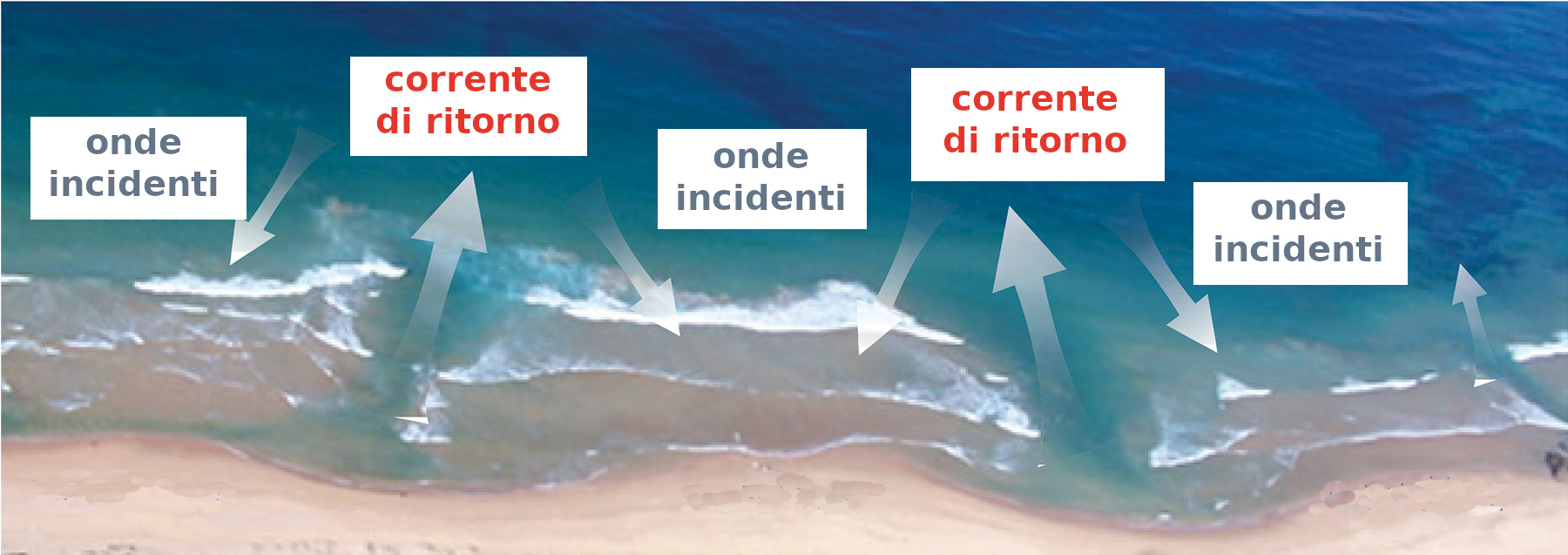
ISPRA is engaged in the development of a simplified model for classifying the geomorphological hazard of Italian beaches, with particular attention to rip currents. Data from the RVMC, together with incident data, will be used to validate this model. Rip currents - a specific case of geomorphological riskThe action of waves approaching the shoreline generates a net water flow towards the beach, followed, for mass balance, by a flow that can be directed offshore (rip currents) or along the coast (longshore drift currents). The predominance of one current over the other is generally linked to the angle at which waves approach the coast. Waves arriving parallel to the coast generate a cell circulation as shown in the figure below. 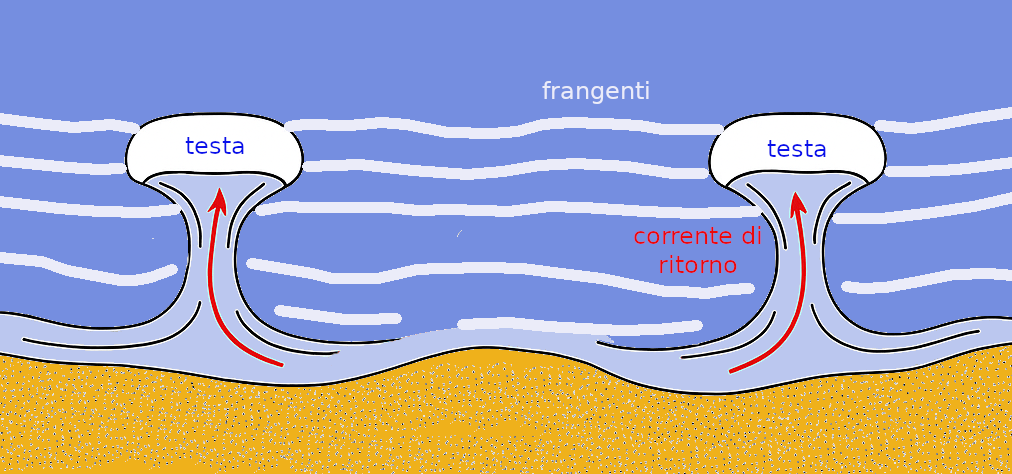
Waves arriving obliquely generate a longshore drift current flowing in the direction of the resultant of the incident wave direction. 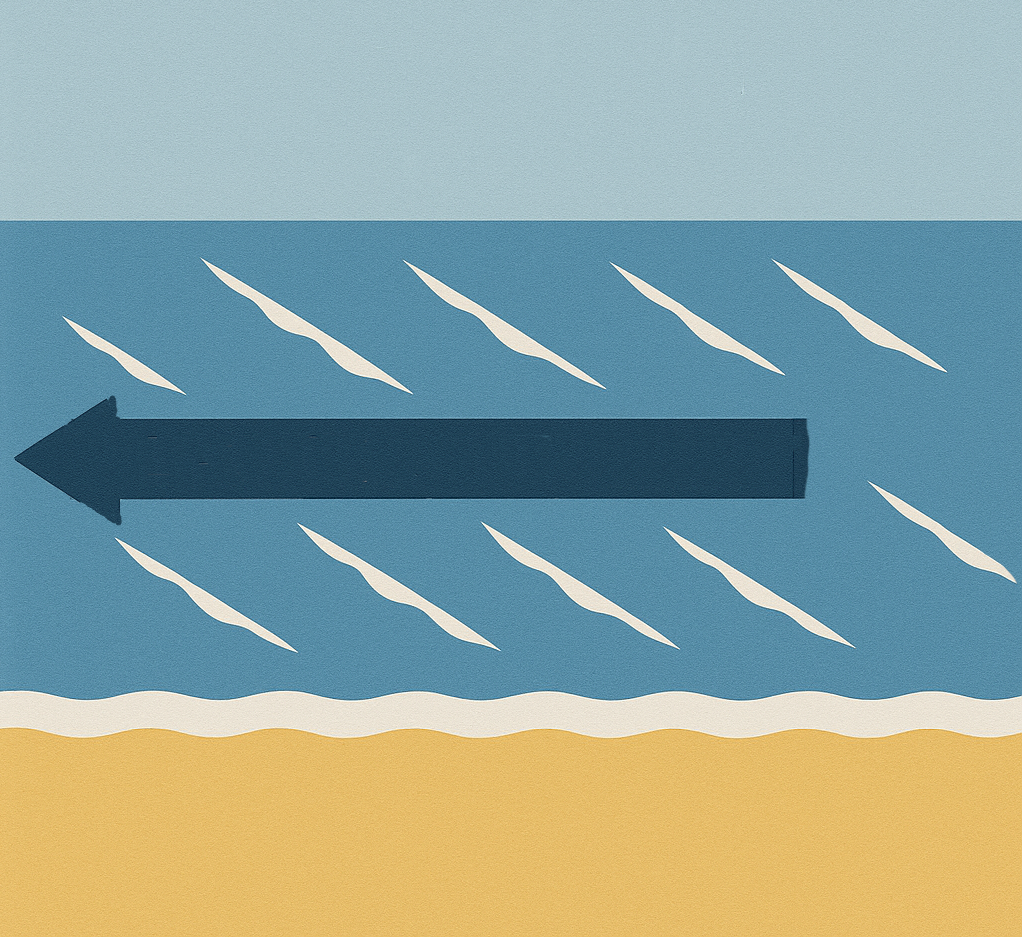
Which type of current is more dangerousAlthough both currents can be dangerous, being moved along the shore generates a less alarming reaction in the swimmer than a current dragging them offshore. Being carried offshore can in fact cause panic and lead the swimmer to unnecessarily resist the flow, resulting in exhaustion and consequently drowning from lack of strength. How to identify a rip currentThe occurrence of such currents is not random, and the beach sections where they are present show recognisable characteristics:
Continue to the next page: RVMC applications in the field of geomorphological risk |